Adult vocabulary
The detailed edition provides more words to scan without declaring any word more accurate than your own description.
Emotion Wheel Printable PDF
Build your own three-page emotion wheel printable PDF with a live preview. This adapted resource includes visible CC BY-SA 4.0 attribution and is not a test, diagnosis or treatment.
Live preview • 3-page vector PDF • Adult and kids options • Clear attribution • No sign-up
Choose adult or kids vocabulary, color or black and white, and paper size. The wheel, glossary, instructions and reflection page update instantly in the preview.
Leave blank to use the standard heading. Personal text stays in your browser.
Your PDF includes three pages
Localization review status
Vocabulary is an editorial adaptation and still awaits independent mental-health professional review. Use it as optional language, never as a clinical classification.
Preview page 1 of 3
The preview and PDF are built in your browser; custom headings are not uploaded. How to print at actual size
This is a changed adaptation, not an official Open Emotion Wheel edition. Source and attribution · CC BY-SA 4.0
A useful download should make provenance, permission and limitations as easy to find as the PDF button.
The live generator creates a new Printable Toolkit layout adapted from Open Emotion Wheel under CC BY-SA 4.0. Every exported page carries attribution, license and change status. The three-page PDF combines the wheel, glossary, usage guidance and reflection record without copying an unattributed image found in search results.
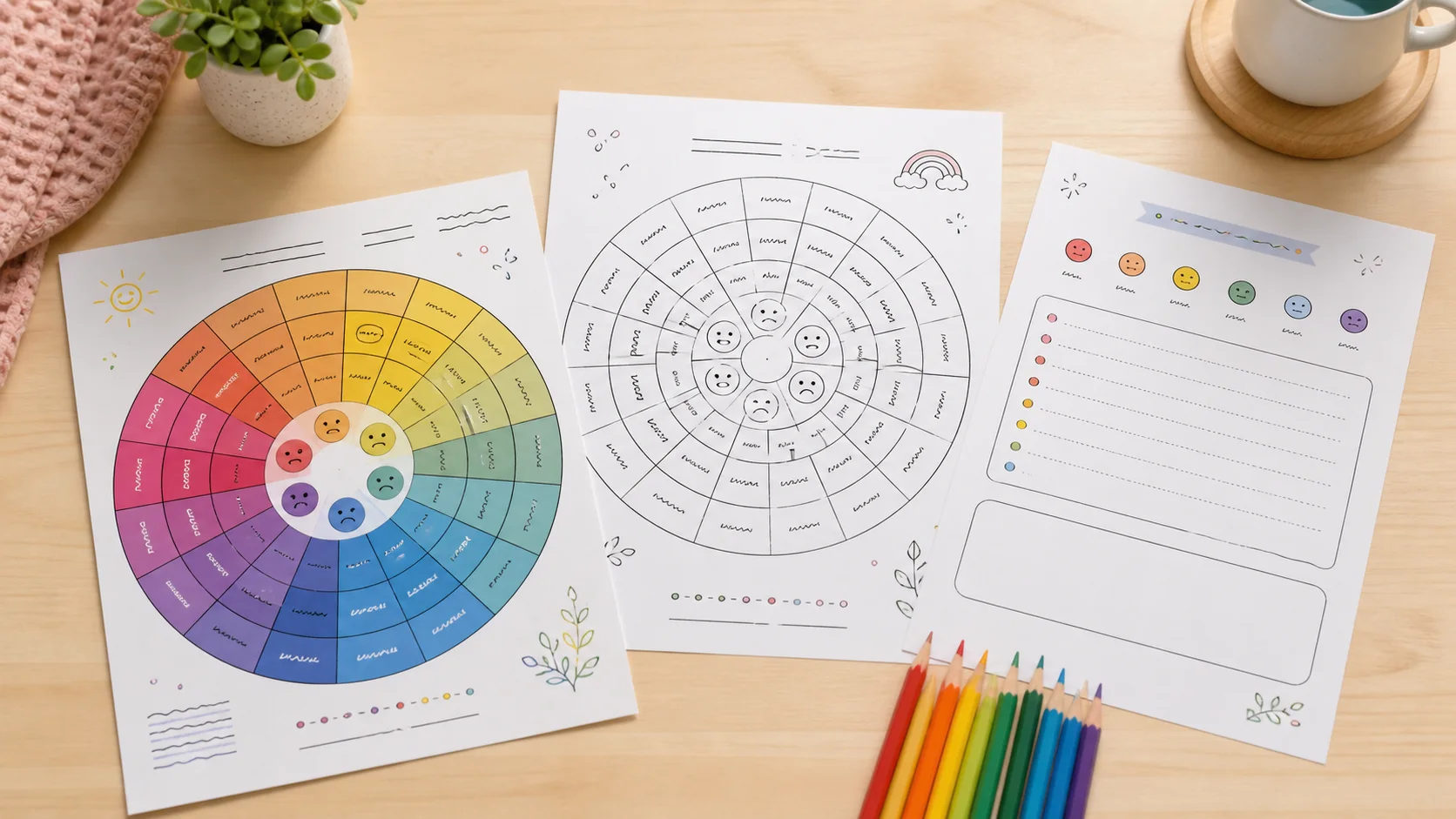
An emotion wheel printable PDF offers possible words, not a definitive classification of your experience. You may pick two words, add your own, disagree with a grouping or stop. Color is a navigation aid rather than a psychological score. Research has also questioned universal wheel models and cross-cultural color metaphors, so this page avoids claiming the wheel measures mental health.
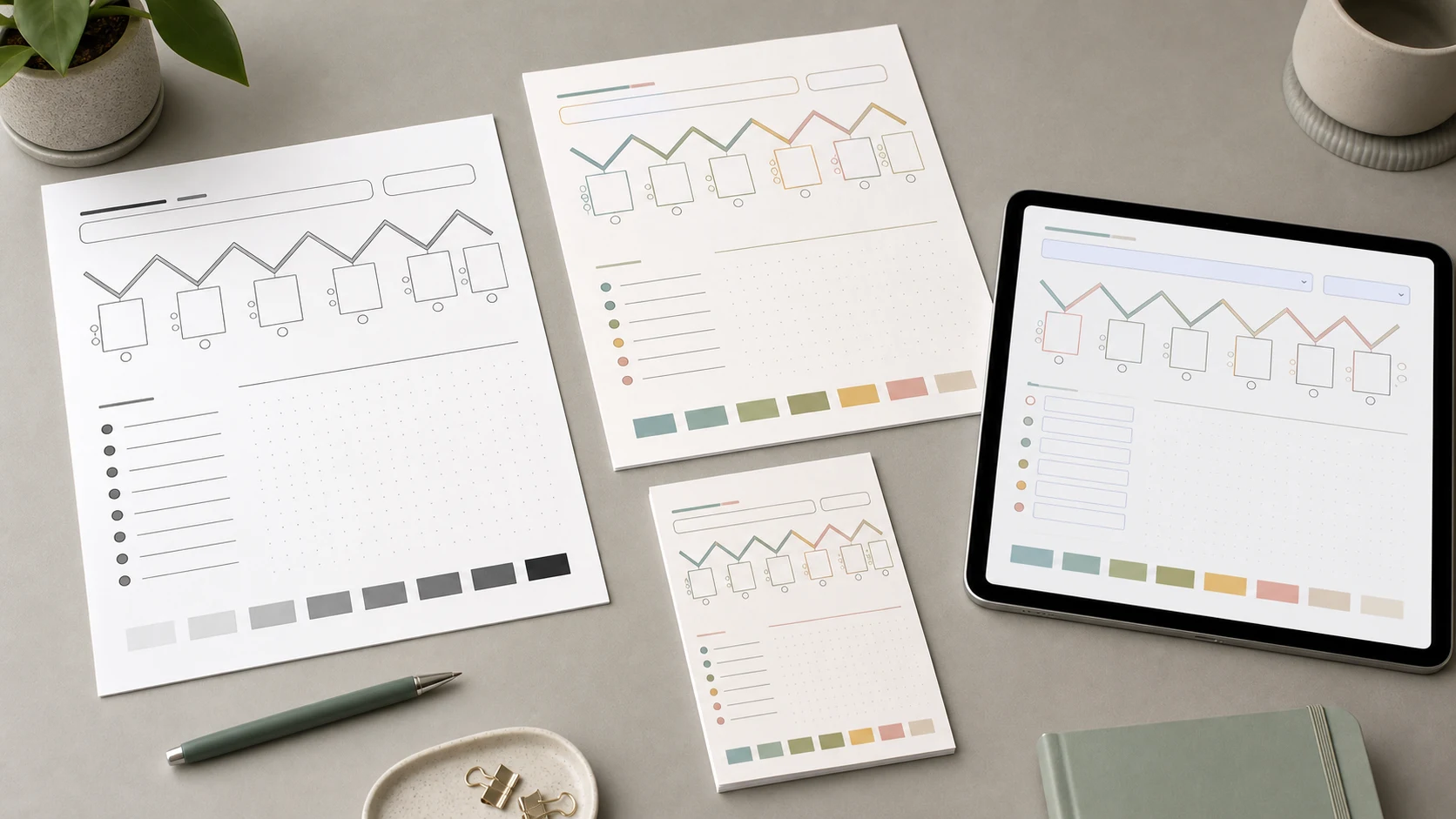
Choose only the format and level of detail you need; every option remains optional and descriptive.
The detailed edition provides more words to scan without declaring any word more accurate than your own description.
The kids edition reduces complexity. An adult can explain unfamiliar words without requiring a child to choose one.
Use color for visual grouping or black and white for lower-ink printing and less dependence on color perception.
Start broad, scan outward, choose zero, one or two words, then decide whether you want to write or talk.
Words can overlap and differ by person, language and culture. Treat the wheel as a prompt, not a glossary test.
The companion sheet leaves room for date, time and your own sentence without intensity scales, conclusions or advice.
A short, consent-based process for personal reflection, family conversation or a classroom check-in.
Use the kids emotion wheel printable PDF when fewer words make scanning easier. Use the adult edition when the reader wants more precise vocabulary; age alone does not decide the best version.
Compare editionsLearn the layout before a difficult moment. With a child, ask whether they want to point, speak, write or skip the wheel. Do not use it to demand disclosure.
Choose a PDFBegin near a broad word, then scan outward for a closer term. More than one word may fit, and no listed word may fit. Add your own language when needed.
Open adult wheelThe reflection page can hold a date, time and sentence about what was happening. A note is not evidence of a cause, pattern or diagnosis.
Open record pageStop if the emotion wheel printable PDF feels overwhelming, frustrating or unsafe. For persistent distress, functional changes or safety concerns, contact a qualified professional or urgent support.
Read safety guidanceThe generated PDF is a clearly marked Printable Toolkit adaptation of Open Emotion Wheel. Provenance, changes and ShareAlike reuse terms stay attached to every page.
Source
Open Emotion Wheel by David Thorpe, BPsychSc(Hons)
Review status
Source reviewed by its creator; adaptation awaits independent professional review
Checked
Open Emotion Wheel states that its source content was reviewed and edited by creator David Thorpe, who lists a BPsychSc(Hons). Printable Toolkit changed the layout, selected and localized vocabulary, and added glossary, guidance and record pages. These changes have not received an independent clinician review. Attribution does not imply endorsement, individualized advice or a validated assessment.
Read who created the resource, its intended scope and the publisher's attribution request.
Creative Commons BY-SA 4.0 licenseSharing and adaptation are permitted with attribution, a license link, change notice and ShareAlike distribution.
An emotion wheel cannot assess risk, diagnose a condition, calm someone automatically or provide urgent help. It is also reasonable to find a long word list unhelpful.
If you may act on thoughts of harming yourself or someone else, cannot stay safe, or are in immediate danger, contact local emergency services now. Use the directory below to find emotional-support services in your country.
Find support through Befrienders WorldwideAvailability, languages and opening hours vary. This external directory is not operated by Printable Toolkit.
Answers shaped by searches for feelings wheel PDFs, kids and adult editions, black-and-white printing, definitions and use.
An emotion wheel printable PDF is a circular vocabulary aid that groups broad emotion words with more specific terms. It can prompt reflection or conversation, but it is not an assessment, diagnosis or treatment.
Yes. Customize the live preview and download the three-page PDF without payment, email or account. The adapted PDF remains CC BY-SA 4.0, so reuse must preserve attribution and ShareAlike terms.
Yes. Separate black-and-white PDFs are available for adults and kids. They reduce color ink and keep the wheel usable without depending on color categories.
The adult emotion wheel printable PDF contains more nuanced vocabulary. The kids version reduces complexity. Choose based on reading comfort and preference, not a rigid age cutoff.
Start with a broad word, scan toward more specific words and select only what feels close. You can choose several words, write another word, or decide that the wheel does not fit.
Starting with a broad inner word is often easier, but it is not a rule. Some people recognize a specific outer word first. Use whichever direction reduces effort and confusion.
Yes, with choice and age-appropriate explanation. Introduce it in a calm moment, explain unfamiliar words, allow pointing instead of speaking and put it away if the child does not want it.
No. Emotion words overlap, experiences can feel mixed and categories vary across people, languages and cultures. A wheel is one vocabulary arrangement rather than a universal answer key.
If useful, add the date, time, one or two words and a brief note about the situation or body sensations. Do not treat a single entry as proof of why you felt something.
The source publisher says psychologists, counsellors, therapists and teachers may use the Open Emotion Wheel. Follow CC BY-SA 4.0: credit the source, link the license, note changes and share adaptations alike.
No. This emotion wheel printable PDF does not produce a score or validated clinical result. Research disputes universal wheel classifications, so it should remain a descriptive vocabulary prompt.
Stop or switch to a blank note, a short list or conversation with someone you trust. If distress persists, functioning changes or safety is uncertain, contact a qualified professional or urgent support.
Is a source, permission or safety boundary unclear?
Pick adult or kids vocabulary, color or black and white, then watch all three pages update live.
Every generated PDF keeps its source and change notice visible and remains a reflection prompt—not a diagnosis or treatment.
Free live preview • 3-page vector PDF • CC BY-SA 4.0 • No assessment or treatment