Support personal notes
Capture plans, feelings or completed activity in your own words without a generated score.
Wellness Planner Printables
Use these wellness planner printables to organize a day, record a mood, plan movement, log a workout or find more precise words for feelings. They are private self-recording tools—not tests, diagnoses, treatment plans or promises of an outcome.
Free planning and recording pages • Clear scope • Local crisis resources
Pick the smallest page that matches what you want to record today. Each tool has one clear job and keeps interpretation in your hands.
Break a day into a short priority list, time blocks, a brain-dump area and a next-action prompt. The layout may support organization, but it does not screen for or treat ADHD.
Open ADHD plannerMark a self-chosen mood label, intensity and optional context. Blank days are information, not a score, and the page does not infer a mental health condition.
Open mood trackerArrange activities you already chose across a week, with space for time, effort and notes. It does not prescribe exercise or decide what is safe for you.
Open fitness plannerRecord exercises, sets, repetitions, duration or your own effort note after activity. A log documents what happened; it is not a coaching or rehabilitation plan.
Open workout logMove from broad feeling families to more specific emotion words for reflection or conversation. An emotion wheel expands vocabulary; it does not diagnose or regulate emotions for you.
Open emotion wheelUseful tracking begins with a clear question, a manageable page and honest limits on what a printable can tell you.
The collection separates self-recording, movement planning and emotion naming. Choose the ADHD planner or mood tracker for a daily check-in, the fitness planner or workout log for activity records, and the emotion wheel when words are the task. Keeping the tools separate makes the record easier to review and avoids turning several unrelated marks into a health score.
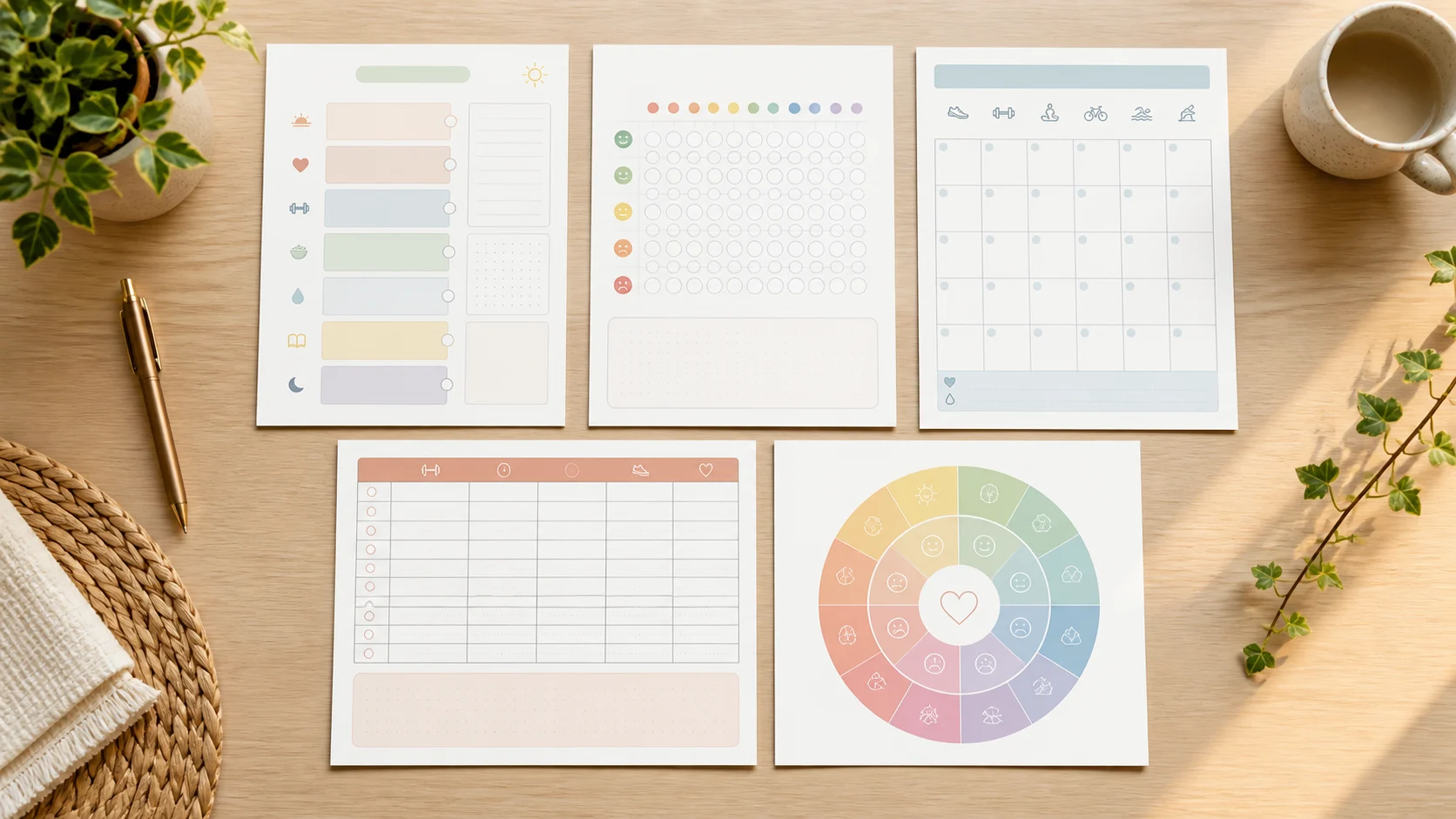
Wellness planner printables can help you remember what you chose to note, but they cannot interpret symptoms, determine risk, prescribe an activity or replace care. Use only fields that feel useful, store completed pages with the privacy their content deserves, and stop using a tracker if it increases distress or compulsive checking.
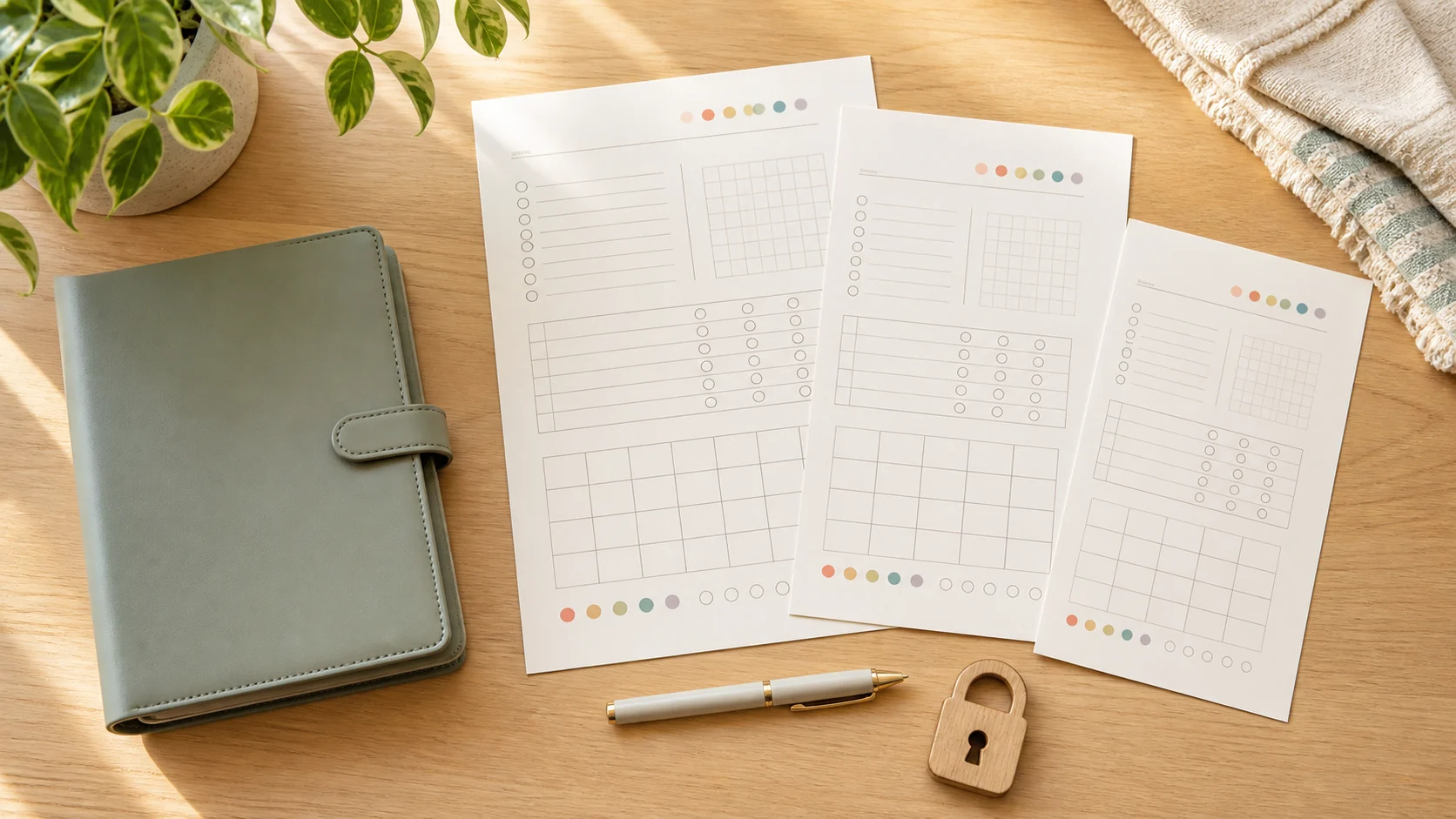
These pages are neutral structures for information you enter yourself. They make no automated judgment.
Capture plans, feelings or completed activity in your own words without a generated score.
A consistent layout can help you compare your own entries without claiming a cause or trend.
Print a single reusable format and keep it where a paper reminder is more useful than another app.
No checklist, mood mark or emotion word on this site establishes ADHD or any health condition.
Fitness pages record a plan you selected; they do not set safe intensity, treatment or rehabilitation.
Write only what you need, and store or dispose of completed pages as carefully as any personal journal.
Start with purpose, keep the record light, and review it without turning it into a verdict.
Choose focus tasks, a mood check-in, planned movement, a completed workout or emotion vocabulary. One purpose usually needs one page.
Start with ADHD planningPick your own mood words, activity units and note length. A blank or changed entry is not failure and does not need to be corrected.
Try the mood trackerUse the fitness planner to arrange activities you selected. If safety is uncertain, ask a qualified health professional before beginning or changing activity.
Open fitness plannerLook for practical questions to raise, not self-diagnoses. Persistent concern, significant change or distress belongs in a conversation with a qualified professional.
Open workout logAn emotion wheel can offer vocabulary for a journal or conversation. More precise words do not prove a cause or tell you what treatment is needed.
Open emotion wheelTrust information is shown explicitly because wellness content sits close to health topics. Source links and crisis details are checked separately from the printable designs.
Author
Printable Toolkit Editorial Team
Review status
Editorial scope review; not clinically reviewed
Last updated
No doctor, psychologist, therapist, trainer or other clinician has reviewed these tools for an individual user. The editorial review checks that wording stays within planning, recording and emotion-vocabulary scope. It does not certify medical accuracy for diagnosis, treatment, exercise clearance or crisis assessment.
These printables are not monitored and cannot respond to an emergency. Do not wait for a worksheet, tracker or website reply if you may hurt yourself or someone else, cannot stay safe, or need urgent medical help.
In the United States, call or text 988 or use the 988 Lifeline chat. If danger is immediate, call 911 or your local emergency number now.
Open 988 LifelineOutside the United States, contact your local emergency service or a verified crisis line in your country.
Answers to common searches about free wellness planners, mood trackers, workout logs and emotion wheels.
They are paper-friendly layouts for personal planning and self-recording. This hub groups an ADHD planner, mood tracker, fitness planner, workout log and emotion wheel without combining them into a diagnostic score.
Yes. The tools can be opened without an account, payment or email gate. Check each tool page for its available paper sizes and export options.
No. A focus-friendly planner organizes tasks and notes; it is not a screening questionnaire and cannot diagnose ADHD. Ask a qualified professional if you want an assessment.
Use a mood word or color you define, optional intensity, date and brief context. Avoid treating a single mark as proof of a condition. Bring concerns or meaningful changes to a qualified professional.
A fitness planner arranges activities you intend to do; a workout log records activity after it happened, such as exercises, sets, repetitions, duration or notes. Neither decides what exercise is safe.
Begin with a broad feeling family, then scan nearby words for a closer description. Use the word in a note or conversation. The wheel expands vocabulary; it does not identify a disorder or prescribe a response.
It can for some people. Pause or stop if tracking increases distress, shame, rumination or compulsive checking. A qualified professional can help you decide whether and how to keep records.
No. They complement personal organization only. They do not replace assessment, treatment, professional exercise guidance or crisis support.
Use the crisis information on this page immediately rather than completing a printable. In the United States, call or text 988; call emergency services when there is immediate danger.
Is a boundary or resource unclear?
Start with one purpose and one page: focus, mood, movement, workout records or emotion words.
Keep the printable as a personal record, never as a diagnosis, treatment plan or emergency resource.
Free tools • Transparent review status • Crisis resources included