Any letter height from 4 to 20 mm
Half-millimetre steps across the whole early-years range, so the paper matches the exercise book the school already uses instead of forcing a compromise.
Printable Handwriting Paper
Blank three-line handwriting paper where you set the letter height instead of hunting for the right download. A solid baseline to sit letters on, a dashed midline for x-height, and a top line for ascenders — printed at the exact size a four-year-old or a nine-year-old actually needs.
Free, no sign-up, no watermark — vector PDF and PNG generated in your browser.
The preview is drawn to scale from the same geometry that goes into the PDF, so the letter height you set is the height a ruler finds on the printed sheet.
The height of a lower-case x. The dashed midline sits here and the top line sits twice as high.
Every sheet is drawn as vector geometry inside your browser. Nothing is uploaded and nothing is stored. How to print at actual size (100%)
Most downloads give you one fixed line height. Children move through three or four sizes in as many years, so the size has to be a number you set, not a file you go looking for.
The x-height slider is the whole tool. Set 12–15 mm for a preschooler still building pencil control, 8–10 mm once a child is writing on ruled paper, and 6–7 mm as they move towards ordinary lined pages. The dashed midline sits at exactly that height and the top line at twice it, so the proportions stay correct at every size — and because the sheet is exported as vector geometry, what you set is what a ruler measures on the print-out.
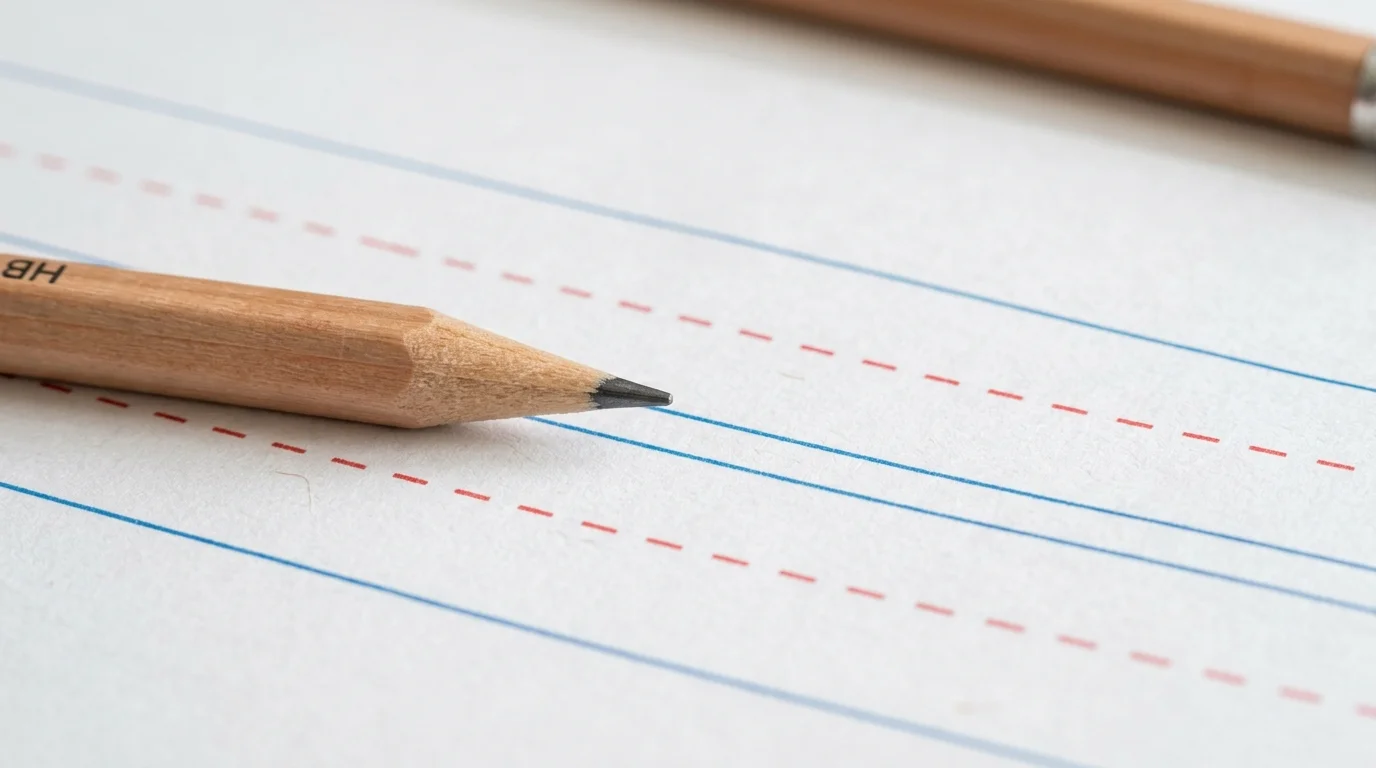
On good handwriting paper the three lines are not equal. The baseline is drawn heaviest because that is where letters sit; the midline is dashed so it guides without competing; the top line is lightest because it is a ceiling, not a landing point. The gap between line groups is yours to widen too, which is what descenders on p, g and y need before a child writes them confidently.
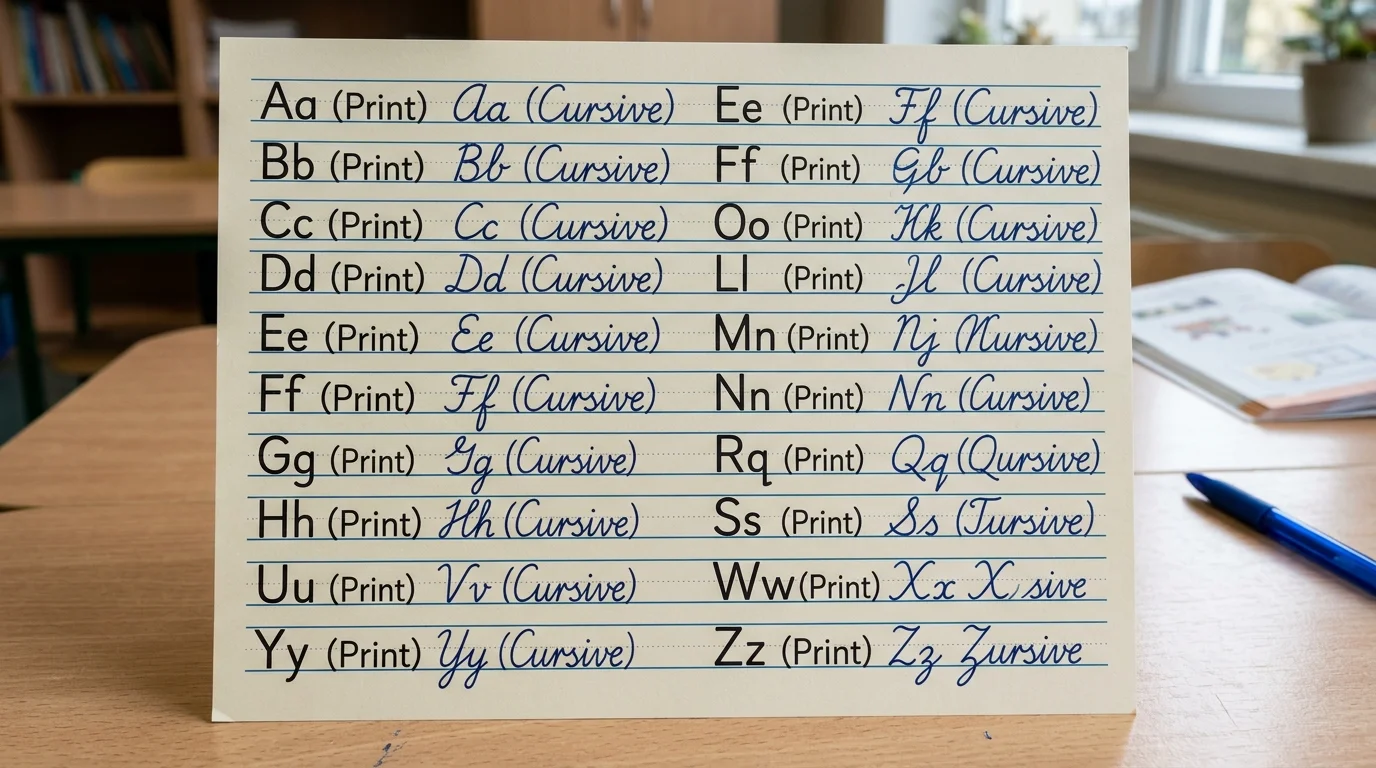
Choices made by teachers and parents at the kitchen table, not by a template library — which is why this printable handwriting paper works.
Half-millimetre steps across the whole early-years range, so the paper matches the exercise book the school already uses instead of forcing a compromise.
Keep it while letter shapes are still forming, then remove it for a two-line page as the child moves towards writing on ordinary ruled paper.
Widen the gap between line groups so the tails of p, g, y and j have somewhere to go, or tighten it once they no longer collide with the row below.
Seven presets plus a colour picker. Pale grey keeps pencil work dominant; sky blue drops out of photocopies; black scans hard for classroom sets.
Add a name-and-date rule for handing sheets to a class, and a title so a stack of practice pages stays sorted by week or by letter group.
One sheet or up to twenty identical pages per download, plus a PNG when the guides are going into a tablet app instead of a printer.
Four steps to printable handwriting paper that fits the hand doing the writing.
Start at 12–15 mm for preschool and reception, 8–10 mm for children already writing on ruled paper, and 6–7 mm as they approach ordinary lined pages.
Keep the dashed midline while letter shapes are still being learned. Widen the gap between line groups if descenders are crashing into the row underneath.
The top line always sits at twice the x-height, so ascenders stay in proportion at every size.
Drop the line darkness so a pencil stroke is the strongest mark on the page, then switch on the name-and-date row if the sheets are going out to a class.
Print one sheet, let the child write a line, and adjust the height before printing the rest.
Export the PDF and choose Actual size or 100% scale in the print dialog rather than Fit to page, then measure the gap between baseline and midline to confirm.
Read the printing guideLetter heights, line styles, ages and printing printable handwriting paper at exact scale.
Yes, completely. There is no account, no email wall, no watermark and no limit on how many sheets you generate, print or photocopy for a class.
As a starting point: 12–15 mm suits preschool and reception children who are still building pencil control, 8–10 mm suits children already writing on ruled paper in Years 1 to 2, and 6–7 mm suits Year 3 and above as they move towards ordinary lined pages. Measure a lower-case x in the child's own book if you want an exact match.
It marks the x-height — the top of lower-case letters such as a, c and x. Letters like b, d and h reach past it to the top line, while p, g and y drop below the baseline. Having it dashed rather than solid tells the child it is a guide, not a line to write on.
Yes. The sheet prints a top line, a dashed midline and a solid baseline for each writing row, with clear space below for descenders. Different countries call the same layout three-line paper, four-line paper or dotted-third paper.
Yes. Switch the dashed midline off and you get a two-line page — a common next step once letter shapes are secure and the child needs less support before moving to ordinary ruled paper.
Download the PDF rather than printing the web page, then set Scale to Actual size or 100% in the print dialog instead of Fit to page. Print one sheet and measure from a baseline to the dashed line above it — that gap should equal the letter height you set.
This page produces blank guides. If you want traceable words, sentences or a name printed on the same guides, use our handwriting worksheet generator or the name tracing generator — they share the same line geometry, so the two kinds of sheet sit together neatly.
Yes. Cursive needs more room below the baseline because joined descenders sweep further, so widen the space between line groups and keep the dashed midline as a reference for the body of each letter.
Yes. Raise the page count before downloading and one PDF will hold up to twenty identical sheets, which is far quicker than sending the same page to the printer over and over.
Yes — print and photocopy them freely for your pupils. Reselling the generated PDFs, or packaging them into printable products for commercial resale, is not permitted.
Something not working as expected?
Set the letter height in real millimetres, tune the guides, and print.
No account, no watermark, and nothing you type leaves your browser.
Free • Vector PDF & PNG • A4, Letter, A5 & Legal