Uppercase, lowercase, or both
Teach capital letters alone, lowercase letters alone, or pair both cases on every page for direct visual comparison.
Free Alphabet Tracing Worksheets
Build alphabet tracing worksheets with uppercase and lowercase models, start arrows, picture vocabulary, word tracing, and blank writing lines.
Free • No sign-up • No watermark • Vector PDF made privately in your browser
Pick a single letter for today’s lesson or make all 26 alphabet tracing worksheets in one printable PDF. Every option updates the preview.
Choose a letter
Print uses clear beginner letterforms. Cursive uses a joined school hand; check that it matches your school’s model.
Letter A practice page
Your alphabet tracing worksheets are rendered locally as vector pages. No worksheet data is uploaded. Print at actual size (100%)
Good alphabet tracing worksheets show where a letter begins, how its two cases relate, and when a child should move from tracing to independent writing.
Each page pairs the capital and lowercase form so children can compare them without hunting through separate books. Optional start dots and arrows make the first pencil movement visible. Use the cue to demonstrate the letter once, then ask the child to say the movement aloud while tracing.
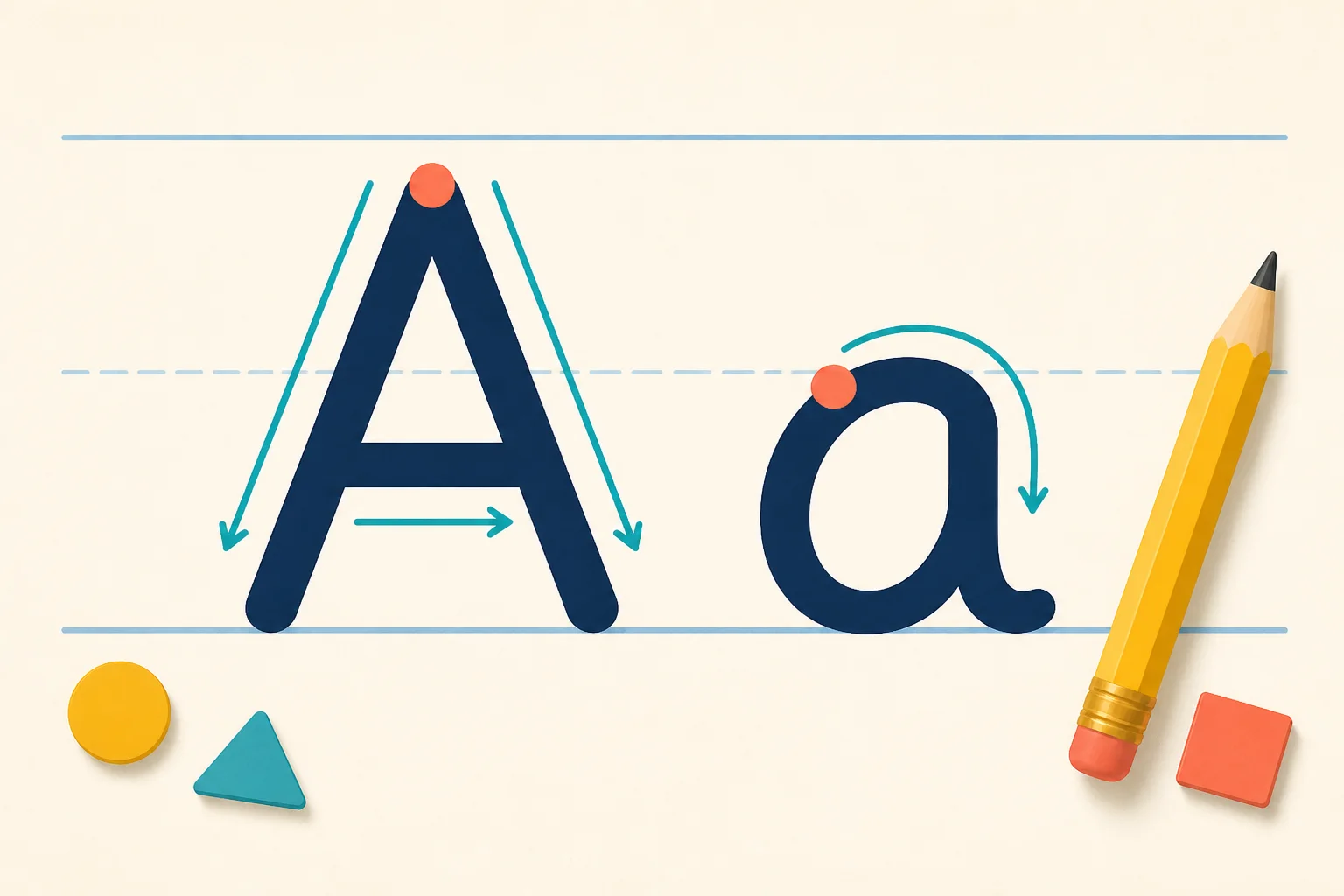
Print only the letter your learner is meeting today, or combine all 26 alphabet tracing worksheets into one consistent PDF. Picture cues connect each letter to a familiar English word, while separate letter, word, and blank rows create a gradual trace-copy-write sequence.
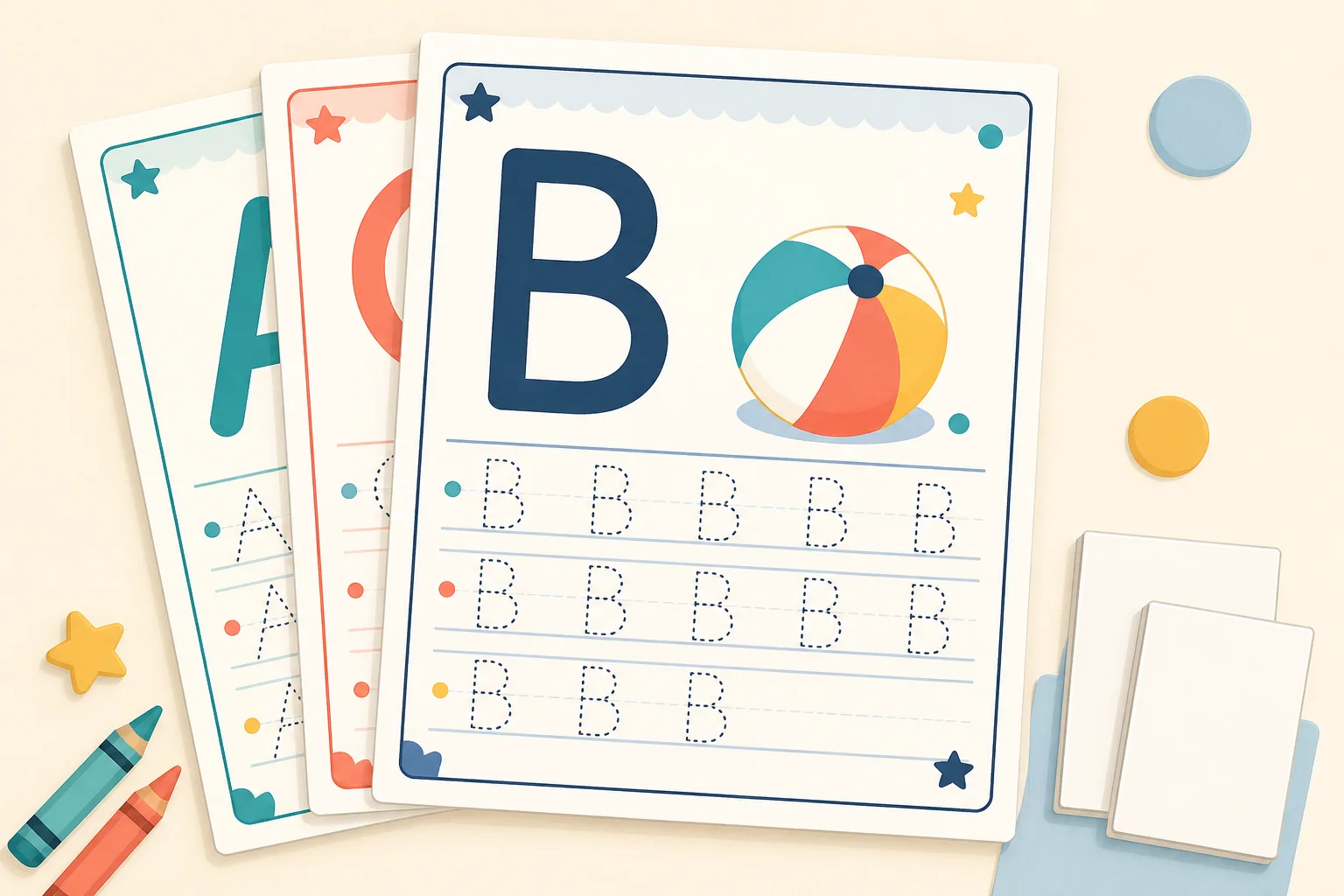
Choose only the support a learner needs; too many cues can make a practice page harder to read.
Teach capital letters alone, lowercase letters alone, or pair both cases on every page for direct visual comparison.
Place the start dot on the first stroke and follow the arrow along the letter; remove the cue once the movement is secure.
A simple line illustration and familiar English word connect the target letter to meaning without filling the page with decoration.
Move from repeated dotted letters to a picture word and independent rows on the same alphabet tracing worksheet.
Use readable print for early letter formation or school cursive when it matches the handwriting model your child is learning.
Export crisp vector pages in the paper size you actually use, with an optional A–Z reference and short teaching notes.
A short, repeatable lesson is more useful than asking a child to finish every row at once.
For a focused lesson, select one letter. Choose the full set when you need a reusable alphabet tracing worksheets workbook or want consistent pages across a term.
Select uppercase, lowercase, or both, then choose print or cursive. Letterforms vary between curricula, especially lowercase a, g, and school cursive, so compare the preview with the model used in class.
Start dots, arrows, picture words, dotted rows, and blank rows serve different purposes. Begin with more guidance and remove one support at a time as formation becomes automatic.
Ask the child to trace with a finger before picking up a pencil.
Download the A4 or Letter PDF and choose Actual size or 100% in the print dialog. Model one letter, watch two or three attempts, and stop before grip or posture deteriorates.
Read the printing guideAnswers based on common searches about age, letter order, print versus cursive, arrows, and printing.
Yes. Create one letter or all 26 alphabet tracing worksheets, download the PDF, and print it without an account, paywall, or watermark. The generator runs in your browser.
There is no single order for every curriculum. Uppercase letters often have simpler straight strokes, while lowercase letters appear more often in reading. Follow the child’s school sequence; use the Both option when comparing the two forms is useful.
They are most often used in preschool and kindergarten, but readiness matters more than age. A child should be able to make basic vertical, horizontal, curved, and circular marks without pain or excessive pressure.
The page gives a start dot and compact direction cue for the first movement, not a numbered diagram of every stroke. An adult should model the full letter once, especially for letters whose school forms vary.
Yes. Choose One letter and select A–Z, or choose Full A–Z set to make a 26-page workbook. The optional reference and teaching-tips page is added only once at the end.
A familiar picture and word connect the written shape to vocabulary and an initial sound. Say the word together, but remember that accent and sound relationships can vary; the pictures here use English vocabulary.
Clear print is usually the easiest place to start because it matches early reading text. Use cursive when the learner’s school introduces it, and check the preview because cursive models differ by country and curriculum.
Quality matters more than filling the sheet. Two or three attentive rows may be enough for a beginner. Leave blank rows for one independent attempt, and stop if letter shape, pencil grip, or posture begins to worsen.
Choose A4 or US Letter to match your paper, then select Actual size or 100% in the print dialog instead of Fit to page. The PDF is vector, so outlines remain crisp at the chosen size.
Letter tracing has no separate answer key because the solid model on each page is the reference. Enable the optional A–Z reference and teaching-tips page when an adult wants a quick overview beside the practice set.
Something not working as expected?
Choose one letter for a focused lesson or build the full A–Z set.
Adjust the cues, practice rows, letter style, and paper size before you print.
Free • A4 or Letter • No sign-up • No watermark